
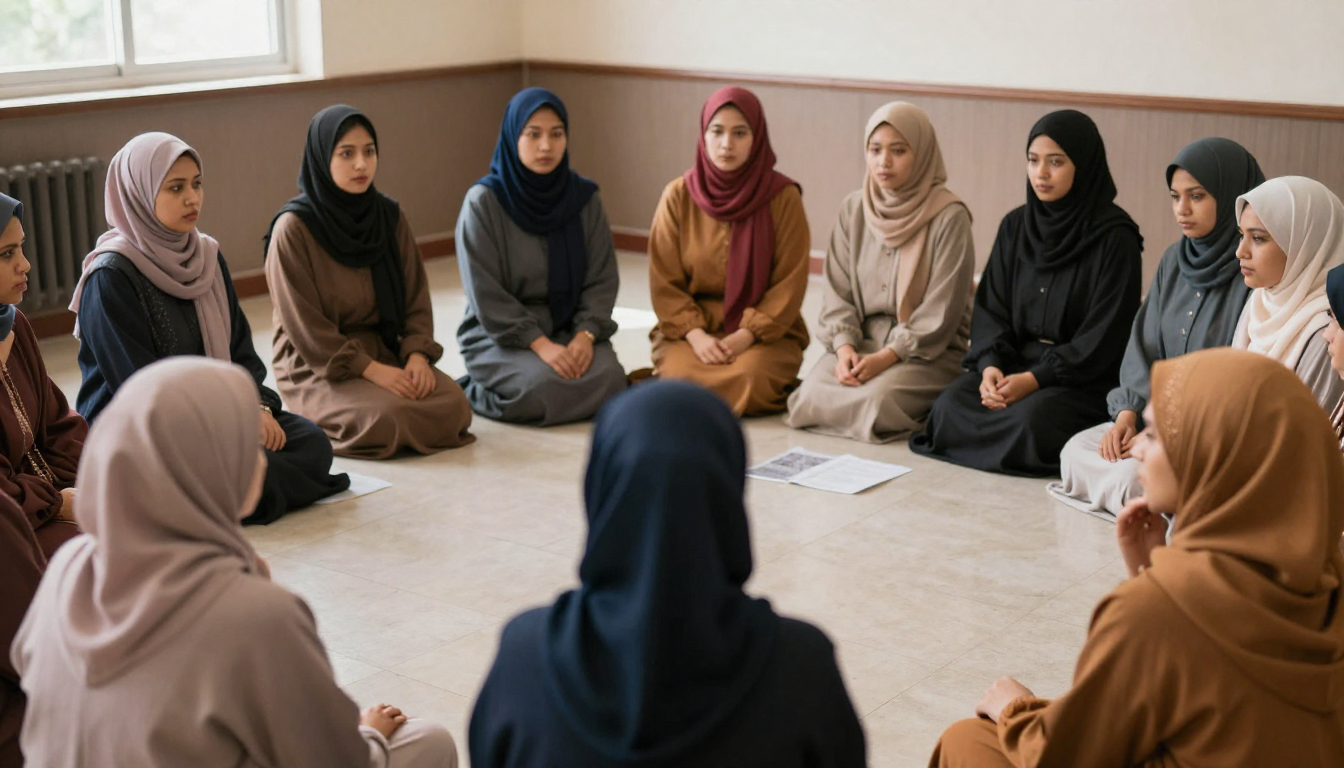
Islam has often been misunderstood regarding the status and rights of women. Yet, the teachings of the Quran and Sunnah provide clear guidance on Islam and women’s rights, justice, equality, and dignity. Women have always played vital roles in society, and Islam recognizes their contributions and responsibilities. Through careful study and reflection, one can see that the religion promotes respect, fairness, and protection for women’s welfare. This understanding is essential for building societies where all members, regardless of gender, can thrive. Ishrat Aziz’s insights illuminate how human nature, societal realities, and divine guidance intersect to uphold the rights of women.
The Foundations of Islam and Women’s Rights
Islamic teachings emphasize both responsibility and opportunity for women. The Quran clearly instructs that women must be treated with fairness, dignity, and respect, which forms the foundation of Islam and women’s rights. Therefore, their education, financial independence, and participation in social affairs are not just encouraged but considered vital. Moreover, Prophet Muhammad’s practices reinforced women’s roles in decision-making, family, and community life. Consequently, these principles highlight that Islam prioritizes balance between social order and individual freedom. Scholars and followers must continuously study these teachings to understand how they remain relevant in contemporary society. By recognizing women’s rights, communities can ensure justice, security, and mutual respect.
Social and Legal Context of Women’s Rights
In exercise, Islam and ladies’ rights paintings collectively to create harmonious communities. Legal provisions regarding inheritance, marriage, and property make sure ladies get hold of fair remedy. These rights aren’t optional but form the center of ethical society. Additionally, cultural variations have sometimes obscured those concepts, yet the unique teachings consistently promote safety and empowerment for girls. When carried out effectively, these rights foster equality without compromising societal values. Socially, girls’ active involvement strengthens families, offices, and public life. Therefore, expertise the historical and spiritual context enables dispel myths and demonstrates Islam’s commitment to ladies’ well-being.
Education and Empowerment of Women
Education has constantly been a critical thing of Islamic teachings on equality and women’s rights. The Quran emphasizes mastering for all, making know-how a device for private boom and societal benefit. Women’s education empowers them to make informed selections, contribute economically, and take part in decision-making. In addition, literacy and competencies improve own family fitness, monetary balance, and network resilience. Schools, mentorship programs, and network support play vital roles in selling these values. By prioritizing training, societies follow Islamic teachings on equality while respecting women’s dignity and independence. Ensuring get entry to learning possibilities becomes no longer only a spiritual responsibility but a realistic step closer to progress.
Family and Economic Participation
Women’s contributions in family and economic life highlight Islam’s balanced approach. They actively support household decisions while also participating in trade, entrepreneurship, and community initiatives. Consequently, this dual role strengthens families and boosts societal stability. Rights to property, inheritance, and financial independence protect women from exploitation. Meanwhile, family support systems reinforce responsibilities without diminishing opportunities. Communities that embrace these principles witness higher productivity, better education, and stronger social cohesion. Therefore, Islam encourages women to participate fully while safeguarding their interests and ensuring fairness in every sphere of life.
Women in Leadership and Community Service
Women historically performed critical roles in management, social services, and non-secular guidance. Islamic teachings help this involvement as lengthy as it advantages society and respects communal harmony. By taking part in governance, education, and charitable work, ladies help form ethical and inclusive communities. This involvement demonstrates that Islam encourages energetic contribution without compromising spiritual or social values. Communities benefit while girls’ perspectives are included in decision-making, improving effects for households and neighborhoods alike. Understanding those practices suggests the faith’s deep dedication to fairness and shared duty.
Women’s Role in Conflict Resolution
Women have traditionally contributed to peacebuilding and conflict resolution in their groups. Islam recognizes their capability to mediate disputes, offer recommend, and manual moral selections. Their involvement frequently strengthens family bonds and fosters agree with amongst associates. By encouraging girls to participate in warfare decision, societies benefit from diverse perspectives and fairer effects. Education, revel in, and know-how of social dynamics empower women to address disputes effectively. Moreover, women regularly approach issues with empathy, endurance, and readability, which reduces tensions and forestalls escalation.
Consequently, integrating ladies into selection-making techniques in households, communities, and agencies aligns with the standards of justice promoted via Islam. Encouraging girls’ engagement in those areas guarantees disputes are resolved constructively even as reinforcing mutual appreciate. Ishrat Aziz emphasizes that spotting girls’ contributions in resolving conflicts strengthens communities and encourages cooperation. By together with ladies in leadership and mediation roles, societies create stable environments where equity and ethical concepts guide day by day interactions, making sure that the rights of all participants, in particular girls, are reputable and guarded.
Health, Safety, and Well-Being
Islam emphasizes the bodily, emotional, and non-secular well-being of girls. Proper nutrients, healthcare, and protection from damage are encouraged to keep stability in lifestyles. The Quranic verses on women’s rights and Sunnah offer guidance that guarantees women’s fitness is reputable within each own family and society. Protecting women from violence, forget about, or discrimination aligns with the wider ideas of justice and mercy. Consequently, societies that honor these teachings see progressed family health, more potent groups, and empowered people. Prioritizing women’s properly-being reflects the holistic technique of Islam closer to human welfare and social harmony.
Balancing Tradition and Modernity
Understanding Islam and girls’ rights also entails balancing conventional values with present day wishes. While cultural practices might also range, center standards of fairness, respect, and dignity continue to be consistent. Applying these teachings in modern-day society lets in girls to make contributions professionally, socially, and intellectually without compromising ethical foundations. Awareness campaigns, instructional reforms, and supportive community structures help align traditional steering with modern possibilities. This balance ensures that girls stay empowered while societies preserve cultural concord and balance.
Media and Representation of Women
Media illustration notably influences perceptions of girls and their rights. Islam encourages respect, dignity, and equity, yet cultural and social portrayals often misrepresent those teachings. Highlighting ladies’ achievements, education, management, and community contributions counters stereotypes and reinforces empowerment. Moreover, positive illustration inspires confidence and motivates women to pursue roles in training, business, and social tasks. Moreover, accurate portrayals educate society about women’s rightful popularity in own family, paintings, and non-secular lifestyles.
Social media, guides, and storytelling platforms can function tools to promote attention about Islam & women’s rights at the same time as challenging misconceptions. Communities that help respectful representation see stepped forward social concord, gender equality, and civic engagement. Ishrat Aziz notes that know-how media’s have an effect on is important for guiding societal perspectives toward justice and fairness. By selling actual and galvanizing narratives, girls gain popularity, encouragement, and possibilities to contribute meaningfully. This approach guarantees that their dignity is reputable, their voices are heard, and their potential for leadership and societal impact is absolutely realized.
Promoting Awareness and Understanding
Spreading accurate knowledge about Islam & women’s rights is important for groups worldwide. Misconceptions regularly stand up from selective interpretations or cultural biases as opposed to non-secular teachings. Educational applications, community discussions, and non-secular steering help clarify the authentic message. When women and men understand their rights and duties, society advantages from decreased conflict, stepped forward cooperation, and more potent social bonds. Ishrat Aziz highlights that continuous getting to know and reflection are vital in imposing these principles efficiently. Awareness strengthens appreciate, promotes justice, and builds sustainable groups.
Women’s Role in Spiritual Life
Women’s non-secular contributions play an essential function in nurturing families and communities. Prayer, coaching, and moral guidance empower people and set moral requirements for society. By taking part actively in non-secular and spiritual life, women keep a stability among non-public improvement and social obligation. Islam encourages their engagement in communal worship, look at circles, and mentorship applications, reflecting respect for ladies’ insights. In addition, recognizing this non-secular size enhances social, criminal, and educational empowerment, showing that Islam integrates all components of human existence to aid ladies’ rights.
Women as Agents of Change
Women are not only beneficiaries of rights but also catalysts for positive transformation. Their involvement in education, health, economy, and community initiatives leads to tangible improvements in social cohesion and quality of life. By taking responsibility and leadership in meaningful ways, women embody the principles of Islam and contribute to societal progress. Encouraging women to act as change-makers fosters confidence, independence, and shared responsibility. Islam’s guidance ensures that these efforts remain ethical, just, and beneficial to the broader community.
Conclusion
Understanding Islam and women’s rights requires looking beyond misconceptions and focusing on original teachings. The Quran and Sunnah clearly advocate for women’s protection, dignity, and empowerment in all aspects of life. By respecting these principles, societies can create fairer and more cohesive communities where women actively contribute to social, economic, and cultural development. Ishrat Aziz’s work demonstrates that applying these values thoughtfully strengthens both family structures and public institutions. Ultimately, recognizing women’s rights in Islam ensures justice, equality, and meaningful participation, allowing individuals and communities to thrive in harmony. These teachings remain relevant, practical, and transformative in modern societies.


